
Montgomery, AL · Garage Door Service
Older Garage Doors in Montgomery: Fix or Replace
Montgomery's housing stock mostly dates to 1984-2007. Here's how that build era and the local climate decide whether your garage door is worth repairing.
- Repairs & new doors
- Springs & openers
- Serving 8 nearby communities
The Problem
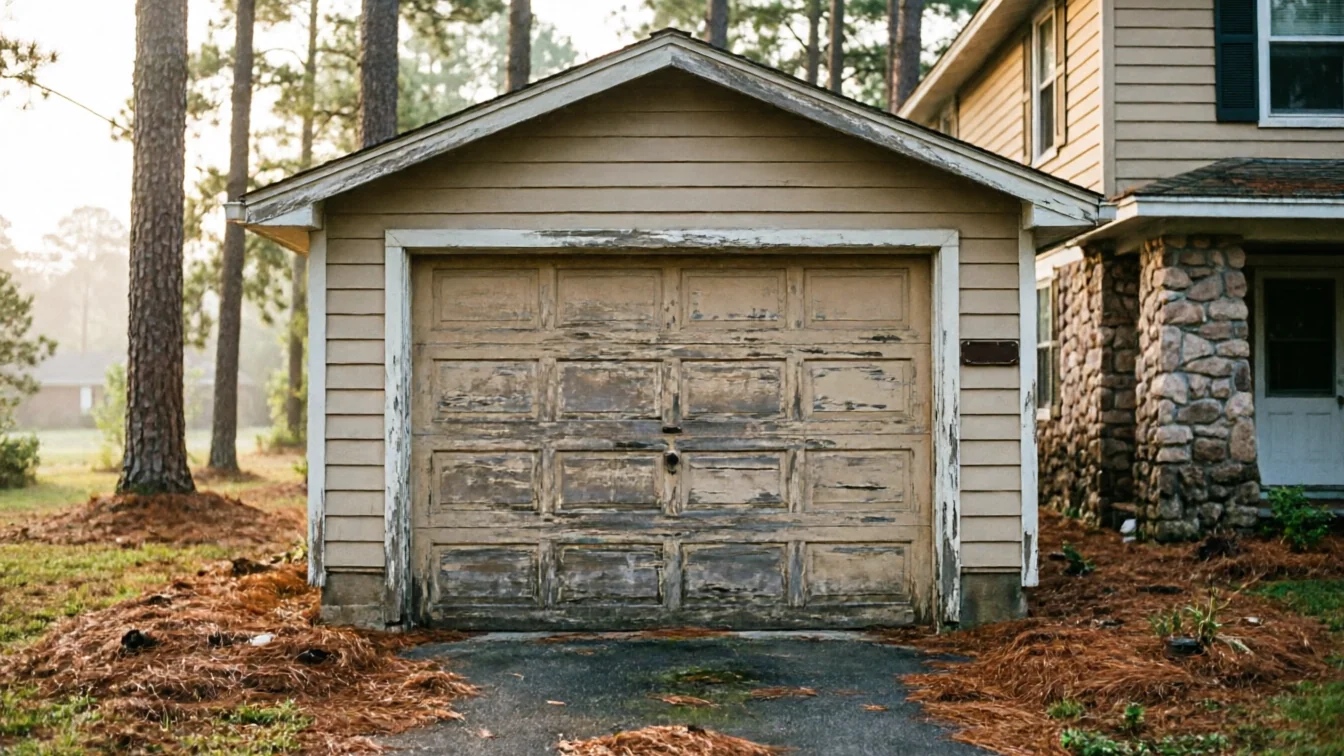
Most houses across Montgomery's service area went up between 1984 and 2007, with the typical build year landing around 1994. That means a huge share of the garage doors we look at are original equipment, now 30 to 40 years old. The door itself might still swing fine, but the springs, rollers, and cable drums under it were sized for a door built before a lot of today's opener tech existed. We see torsion springs that have cycled tens of thousands of times without ever being replaced, rollers worn to an oval instead of a circle, and openers with drive gears that are starting to strip. None of that shows up as a dramatic failure right away - it shows up as a door that's gotten louder, slower, or a little harder to lift by hand than it used to be. Across the nine named areas that make up this stock, the age profile is close to identical, so this isn't a problem limited to one subdivision. It's a problem tied to when the houses themselves were built, and it's catching up with a lot of doors at roughly the same time.
Leaving It Alone
A door that's slow to respond or noisy on a 1990s-era track doesn't get better on its own. Left alone, a worn roller starts chewing at the track edge, which throws the door out of alignment and puts uneven load on the springs. Once one spring on a double door is stressed past its design life, the other one is usually close behind - they were wound and installed together and they wear together. We've opened enough of these to know the pattern: owners wait until the door won't lift at all, and by then what started as a $100 roller problem has taken the spring, the cable, and sometimes the bent track with it. The honest limitation here is that we can't always save the original door once it gets to that point. If the panels themselves have rusted through or the track is bent past where it can be reset square, replacement is the straight answer, and we'll tell you that instead of running up a repair bill on a door that's not worth saving.
How Local Conditions Play In
Montgomery sits in a mild climate with occasional freeze, which is easier on garage door steel than a true hard-winter market - you're not fighting frost heave under the slab or ice jamming the track every January. But mild doesn't mean dry. Humidity swings common to this part of the state work corrosion into exposed hardware slowly, over years, not seasons. On a door built in the early-to-mid 1990s, that's two or three decades of moisture cycling into spring coils and hinge pins that were never stainless. We find more surface rust on torsion springs here than we find cracked panels - the springs lose temper and start to sag before they ever snap outright, which is actually a good thing if it gets caught early, because a sagging spring is a repair and a snapped one under load is a safety call. The same build era holds whether you're closer in or out toward Pike Road, Coosada, or Millbrook - the housing stock doesn't change much across that stretch, so neither does the hardware we're dealing with.
Checking It Yourself
Before you call anyone, there are a few things you can check from the garage floor. Disconnect the opener and lift the door by hand - it should move smoothly and hold its position about halfway up. If it drops or shoots up, the spring tension is off and that's not a DIY fix, but it tells you what the problem actually is before a truck shows up. Look at the springs themselves for rust flaking or visible gaps between the coils. Run a hand along the track for rust pitting or a section that's bowed outward, which usually means a roller has been grinding on it. Listen for a grinding or popping sound on the way up - that's almost always a roller, not the opener. None of this tells you exactly what year your door was installed, but if your house falls in that 1984-2007 build window common to this area, odds are good the hardware is original, and a quick visual check now is a lot cheaper than finding out the hard way on a Saturday morning.
Frequently asked questions
How do I know if my garage door is original to the house?
If your house was built in the typical 1984-2007 window common across Montgomery's service area, there's a decent chance the door and opener are original unless a previous owner replaced them. Check the manufacture date sticker on the inside of the door panel or the opener's motor housing - that's the most reliable way to confirm the age without guessing.
Does Montgomery's climate shorten a garage door's life?
Not dramatically - the mild climate with only occasional freeze is easier on doors than a true cold-winter market. But humidity swings still corrode exposed spring coils and hinges over a few decades, so a 30-year-old door here is more likely to show rust-related sag than frost cracking.
Is it ever worth repairing instead of replacing an older door?
Often, yes. A worn roller, a single failed spring, or a misaligned track on an otherwise solid panel is usually a repair job, not a replacement. We only recommend replacement when the panels themselves have rusted through or the track is bent past resetting - at that point a repair is just delaying the same bill.
Related garage door services in Montgomery
More garage door guides
Book garage door service in Montgomery
Call now or request a quote - tell us what the door is doing and where you are.